
Author: prof. dr hab. n. med. Monika Modrzejewska, prof. PUM w Szczecinie:
II Oddział Katedry i Kliniki Okulistyki Pomorski Uniwersytet Medyczny w Szczecinie
“The idea for StrabiScan, a medical device for strabismus evaluation, emerged in 2019 at the II Department and Clinic of Ophthalmology, PUM, in Szczecin.”
The idea behind the StrabiScan® demonstrator Automated evaluation of the strabismus angle at different eye positions Author: dr hab. n. med. Monika Modrzejewska, prof. PUM w Szczecinie: II Oddział Katedry i Kliniki Okulistyki Pomorski Uniwersytet Medyczny w Szczecinie The idea for StrabiScan, a medical device for strabismus evaluation, emerged in 2019 at the II Department and Clinic of Ophthalmology, PUM, in Szczecin. It is a place where the history of ophthalmology is closely linked to strabismus, its diagnosis, and the development of the method called the “Szczecin localisation method for strabismus examination”. It was initiated in 1960 by Prof. Witold Szymon Starkiewicz and a team of assistants who later continued to implement and treat with this technique, such as Prof. T. Baranowska, Prof. W. Andrzejewska, Dr G. Remlein-Mozolewska, MD, PhD, Prof. O. Palacz, Dr M. Biernacka, Dr E. Sawinska, MD, PhD, and Dr L. Puchalska-Niedbal, MD, PhD. StrabiScan is the world’s first medical device dedicated to the automated assessment of the strabismus angle at different eye positions: horizontal and vertical. The device stems from the creative thought of a team of researchers from the II Clinic of Ophthalmology at the Pomeranian Medical University (PUM) in Szczecin and the Faculty of Mechanical Engineering and Mechatronics at the West Pomeranian University of Technology in Szczecin. The research team led by me includes: Dr Ewa Grudzinska, MD and Health Sciences PhD, physician Magdalena Durajczyk from PUM, Dr Marek Grudzinski, PhD (Eng), and Łukasz Marchewka, MSc (Eng), from ZUT. The researchers mentioned above created a strabological medical demonstrator. Its state-of-the-art solutions and collected data were tested under clinical conditions in a group of patients with strabismus at the Children’s Ward of the II Department and Clinic of Ophthalmology, SPSK2/PUM in Szczecin. Work on the development of the StrabiScan prototype, conducted in 2020–2021, was of a pre-implementation nature. The aim was to conduct a study on the device’s suitability and on the reliability and repeatability of the strabismus angle measurements obtained. The ophthalmological examinations included an analysis of the duration of the strabismus angle assessment and the subjective perception of the inconvenience of the strabismus examination for the patient and the operator, compared to the traditional method using a prism bar (PCT). StrabiScan was developed as part of a team project, partly funded by European funds obtained through a grant competition. The project was titled “Innovative automated measurement of strabismus angles using vision systems and a virtual stereoscopic projection”. On 1 March 2022, PUM filed a patent application for the StrabiScan device with the Polish Patent Office. Final work on the development and upgrade of the StrabiScan device is currently underway at CX Engineering. It will be clinically tested at the Children’s Ophthalmology Centre of the II Clinic of Ophthalmology, PUM, in Szczecin in 2023/2024. The data collected will be used to obtain medical certification in Poland and abroad.
“It was not an accident that the demonstrator was created at the II Department and Clinic of Ophthalmology, PUM, in Szczecin. It has a history of numerous innovative solutions in the field of optical and ophthalmic medical devices.”
It was not an accident that the demonstrator was created at the II Department and Clinic of Ophthalmology, PUM, in Szczecin. It has a history of numerous innovative solutions in the field of optical and ophthalmic medical devices. They were developed thanks to the innovative thinking of Professor Witold Starkiewicz (1906–1978), an ophthalmologist, researcher and academic lecturer, and rector of the Pomeranian Medical Academy, who was also the head of the Department of Ophthalmology and the Department of Pathophysiology of the Visual System. Research into strabismus, the pathophysiology of strabismus, innovative methods of treating strabismus, and the search for the possibility of replacing vision in blind people were the subject of many topics, interests and publications by Professor Witold Starkiewicz1. Results of the research into strabismus were presented at conferences of ophthalmological scientific societies, including Paris (1956, 1970), Leningrad (1957), Brussels (1958), Budapest (1960), Innsbruck (1963), Vienna (1964), Lucerne (1965), Chicago (1968), Leipzig (1968), and London (1969). An important innovation in strabismus treatment methodology was the “localisation method” – also known as the Szczecin method. It uses prismatic lenses, kinesthetic localisation reflexes, and new spatial-motor coordination; thus surgical procedures can be avoided, especially in children. Its effectiveness in conservative treatment was estimated at 70–80%. The theoretical basis for this method was the so-called kinesthetic theory of vision, formulated by Professor Starkiewicz. The method was described as early as the 1960s in numerous scientific publications in Poland and abroad. It should be mentioned that at the same time, innovative devices to replace vision for blind people were developed in the II Clinic of Ophthalmology, headed by Professor Witold Starkiewicz. They included a modification of Professor Kazimierz Noiszewski’s prototype Elektroftalm , using tactile instead of auditory stimuli. Already at that time, a set of 300 photocells was used to trigger vibrators that stimulated the surface of the patient’s forehead, creating on it a simplified, vivid image of the environment. The design of the vibrator system used in Elektroftalm and installed in a helmet placed on a blind person’s head was patented by collaborators from Polskie Zakłady Optyczne (Polish Optical Works). Professor W. Starkiewicz was the author of 11 inventions submitted in patent applications concerning the construction of diagnostic and treatment-supporting devices, 6 of which were patented (an instrument for stereoscopic vision tests, 1972)2, a device for colour recognition by blind people, a device for optical localisation tests using the whole body, a device for testing distance estimation, a multi-channel Elektroftalm , and a cinematographic synoptophore). Given Szczecin’s long-standing interest in diagnostic methods for strabismus, the development of the StrabiScan demonstrator prototype is fully justified. Here, at the Department of Ophthalmology, the treatment of strabismus continues with modern test methods; regardless of the technique used, there is the problem of obtaining reliable and reproducible strabismus angle measurements in independent trials performed by different ophthalmologists or optometrists. Therefore, the fully computerised measurement of the strabismus angle using a method developed by a team of researchers from Szczecin – and currently being further developed by CX Engineering – represents an important innovative solution that facilitates the strabismus angle assessment in a way that is quick, easy, and not burdensome for the patient.
“It was not an accident that the demonstrator was created at the II Department and Clinic of Ophthalmology, PUM, in Szczecin. It has a history of numerous innovative solutions in the field of optical and ophthalmic medical devices.”
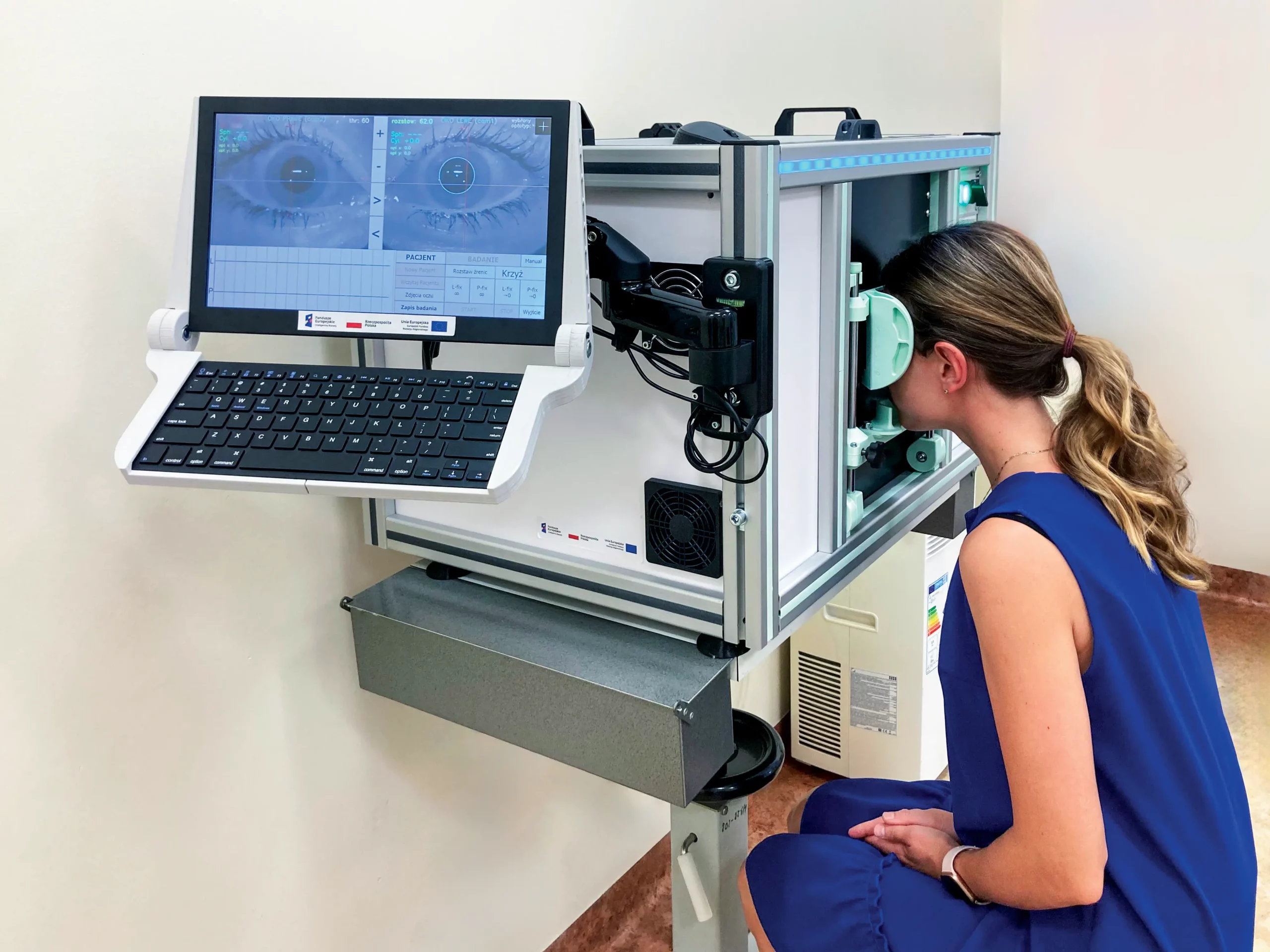
Photo 1: Demonstrator of the device for strabismus angle measurements. A project conducted by a team of researchers from the II Clinic of Ophthalmology at the Pomeranian Medical University in Szczecin and the Faculty of Mechanical Engineering and Mechatronics at the West Pomeranian University of Technology in Szczecin.
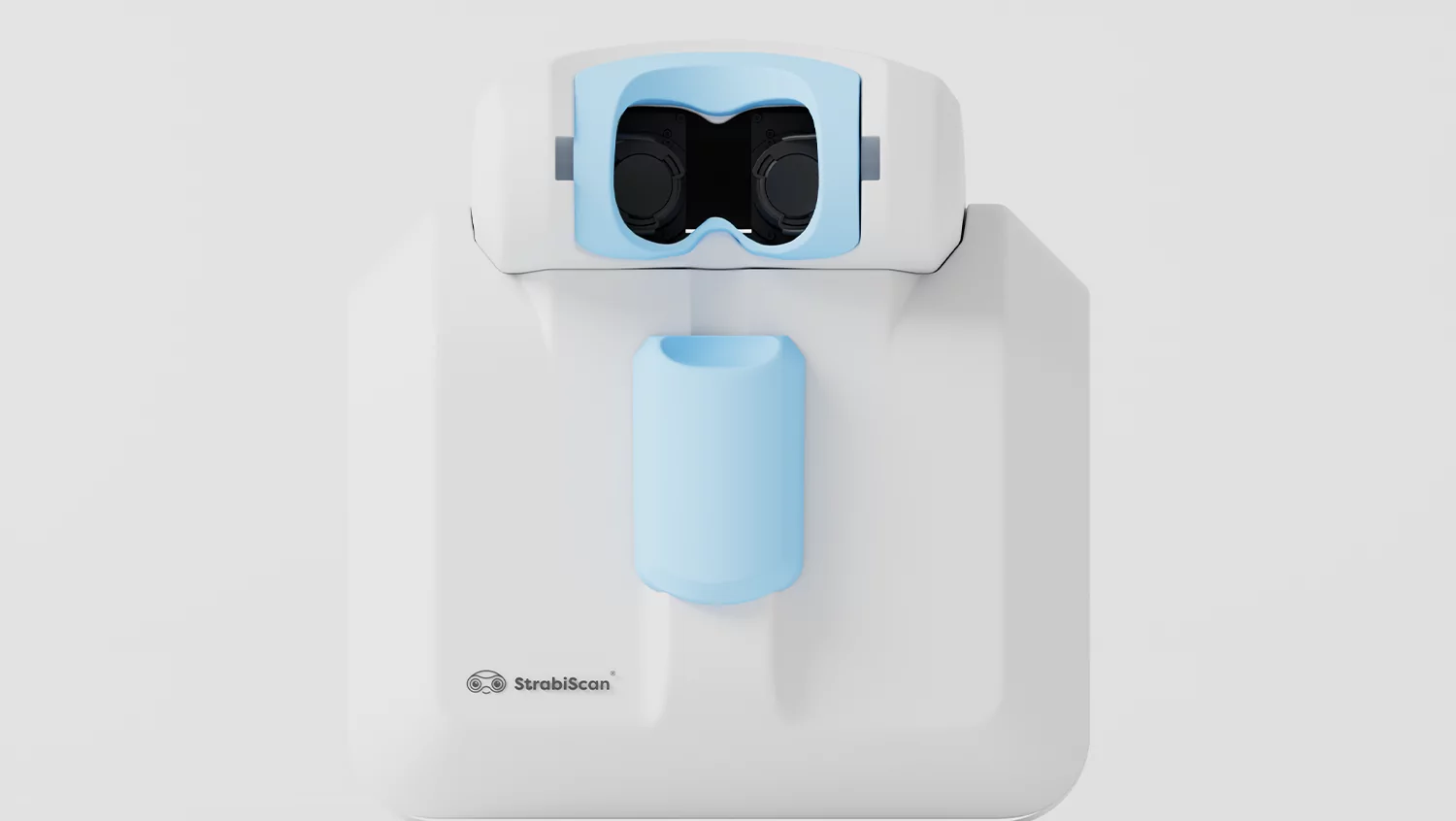
Fig. 1. StrabiScan device prototype. Design and implementation: CX Engineering.
“First impressions of using the device are favourable to me, as an examiner evaluating the strabismus angle, as well as to the young patient.”
Presenting this information about the state-of-the-art device for strabismus examinations, I believe that the device that will soon be available on the market is the one that will win the favour and recognition of ophthalmologists, orthoptists and optometrists in the near future. First impressions of using the device are favourable to me, as an examiner evaluating the strabismus angle, as well as to the young patient. Full automation of the procedures performed, archiving of the test results, a short examination time, the accuracy of angle assessment to 0.1 Δ, the young patient’s interest in the changing optotypes on which they focus their gaze – all result in increased comfort of strabismus examination. This also contributes to my interest in StrabiScan, a device that can assess the angle of eye deviation not only in the horizontal plane, but also in the oblique and vertical planes.